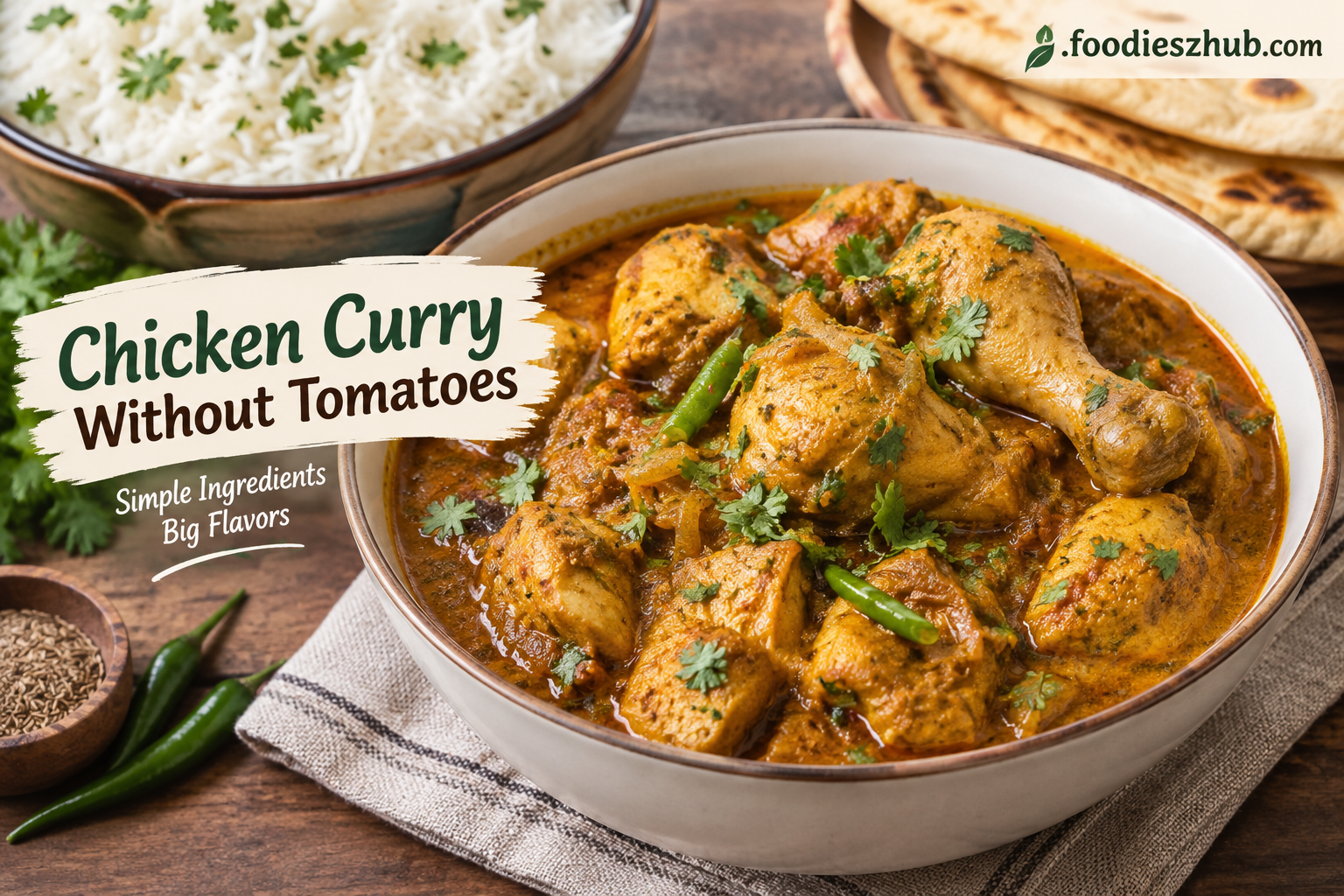
Chicken Curry Without Tomatoes: Easy, Flavorful Homemade Recipe
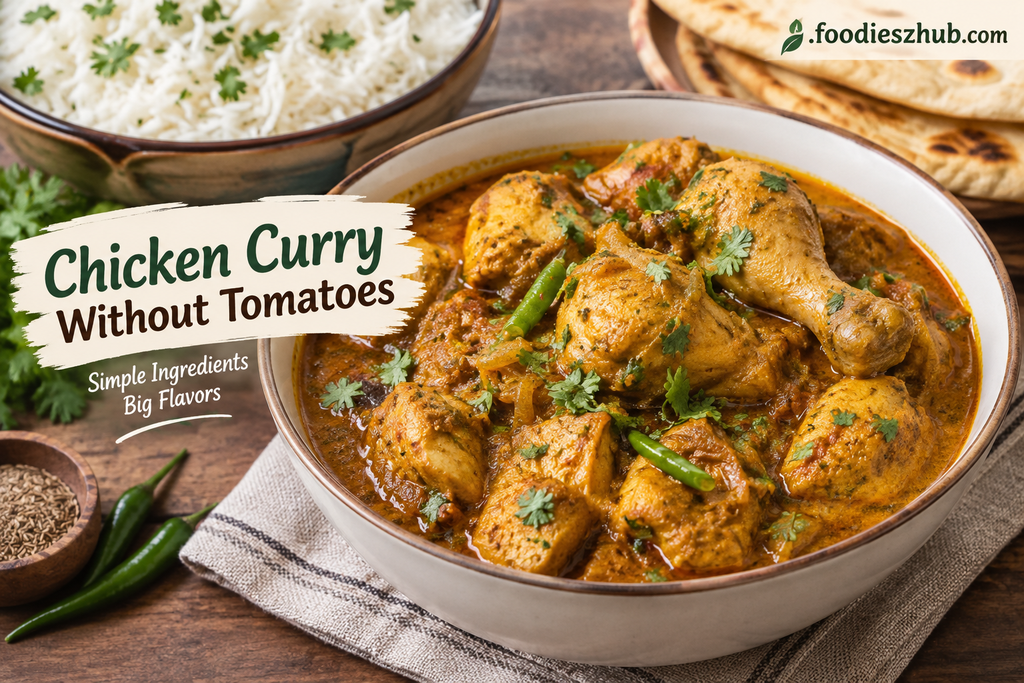
If you love a rich, comforting chicken curry but don’t have tomatoes in the kitchen, don’t worry. You can make an incredibly flavorful chicken curry without tomatoes using simple pantry ingredients. In fact, skipping tomatoes can give the curry a smoother texture and allow the spices, onions, ginger, garlic, and chicken to shine.
This easy chicken curry is perfect for busy weeknights, family dinners, or whenever you want a hearty homemade meal without relying on tomatoes. The recipe uses caramelized onions, yogurt, aromatic spices, and a few basic ingredients to create a thick, flavorful gravy.
Whether you’re out of tomatoes, avoiding them, or simply want to try something different, this chicken curry without tomatoes is worth adding to your regular recipe collection.
Why Make Chicken Curry Without Tomatoes?
Tomatoes are commonly used in many curry recipes because they add acidity, moisture, and a slightly sweet flavor. However, they aren’t essential for making delicious chicken curry.
There are several reasons you might want to make chicken curry without tomatoes. You may have run out of fresh tomatoes, you may not enjoy their flavor, or you may simply want a creamier and richer curry.
When tomatoes are removed, onions and yogurt can provide the body and balance that the curry needs. Slowly cooked onions create natural sweetness, while yogurt adds a pleasant tanginess.
The result is a flavorful curry with tender chicken covered in a thick, aromatic sauce.
Ingredients for Chicken Curry Without Tomatoes
One of the best things about this recipe is that you don’t need a long list of unusual ingredients.
Main Ingredients
- 2 pounds chicken, cut into medium-sized pieces
- 2 large onions, thinly sliced
- 1/2 cup plain yogurt
- 2 tablespoons ginger-garlic paste
- 3 tablespoons cooking oil
- 1 to 2 green chilies, sliced
- 1/2 cup water, or as needed
- Fresh cilantro for garnishing
Ground Spices
- 1 teaspoon salt, or according to taste
- 1 teaspoon red chili powder
- 1/2 teaspoon turmeric powder
- 1 teaspoon ground cumin
- 1 teaspoon ground coriander
- 1/2 teaspoon garam masala
- 1/2 teaspoon black pepper
Whole Spices
- 1 small cinnamon stick
- 2 to 3 green cardamom pods
- 2 cloves
- 1 bay leaf
- 1 teaspoon cumin seeds
You can adjust the amount of chili and spices according to your preference. If you’re cooking for children or anyone who prefers mild food, reduce the red chili powder and green chilies.
How to Make Chicken Curry Without Tomatoes
Making this curry is straightforward, but taking your time with the onions is one of the most important steps. Properly cooked onions create a deep flavor that helps replace the acidity and richness normally provided by tomatoes.
Step 1: Prepare the Chicken
Wash and drain the chicken if that is your usual preparation method. Pat it dry with paper towels so that excess moisture doesn’t prevent it from browning properly.
You can use bone-in chicken for a richer curry or boneless chicken if you prefer something quicker to eat. Bone-in pieces generally add more flavor to the gravy, while boneless chicken cooks faster.
Set the chicken aside while you prepare the curry base.
Step 2: Cook the Onions
Heat the oil in a large heavy-bottomed pot over medium heat.
Add the cumin seeds, bay leaf, cinnamon stick, cloves, and cardamom pods. Let them sizzle for about 20 to 30 seconds until fragrant.
Add the sliced onions and cook them slowly.
This step is extremely important for chicken curry without tomatoes. Don’t rush the onions. Stir occasionally and allow them to become golden brown.
Depending on your heat and the size of the pan, this can take around 10 to 15 minutes.
The onions should be golden and soft rather than burnt. Burned onions can make the curry bitter, so keep an eye on them.
Step 3: Add Ginger and Garlic
Once the onions are nicely browned, add the ginger-garlic paste.
Cook for approximately one minute while stirring continuously.
You should notice a wonderful aroma as the raw smell disappears.
If the mixture begins sticking to the bottom of the pan, add a tablespoon or two of water and continue stirring.
Step 4: Add the Chicken
Add the chicken pieces to the onion mixture.
Increase the heat slightly and cook the chicken for about 5 to 7 minutes, stirring occasionally.
The outside of the chicken should begin changing color and become lightly browned.
This process, sometimes called bhunao, helps develop a deeper flavor in the curry.
Step 5: Add the Spices
Lower the heat and add the turmeric, red chili powder, coriander powder, cumin powder, black pepper, and salt.
Stir everything together so the spices coat the chicken evenly.
Cook the mixture for another 2 to 3 minutes.
If the spices seem dry, add a small splash of water. Avoid letting dry spices sit directly against a very hot pan for too long because they can burn and become bitter.
Step 6: Add Yogurt
Reduce the heat to low.
Beat the yogurt until smooth and add it gradually to the chicken while stirring constantly.
Adding yogurt slowly helps prevent it from curdling.
Cook the chicken and yogurt mixture for several minutes until the oil begins to separate slightly from the curry.
This is another important stage because it develops the rich flavor and thick texture of the gravy.
Step 7: Add Water and Simmer
Pour in approximately 1/2 cup of water, depending on how much gravy you want.
Stir everything together and bring the curry to a gentle simmer.
Cover the pot and cook over low to medium-low heat until the chicken becomes tender.
Boneless chicken may take around 15 to 20 minutes, while bone-in chicken can take approximately 25 to 35 minutes depending on the size of the pieces.
Check occasionally and add a little more water if necessary.
Step 8: Finish the Curry
Once the chicken is fully cooked and tender, remove the lid.
Add garam masala and sliced green chilies.
Simmer uncovered for another 3 to 5 minutes to allow the sauce to thicken.
Taste the curry and adjust the salt or spices if necessary.
Finally, sprinkle fresh chopped cilantro over the top.
Your homemade chicken curry without tomatoes is ready to serve.
What Makes This Curry So Flavorful?
Without tomatoes, you might wonder where the flavor and richness come from.
The answer is the combination of slowly browned onions, spices, ginger, garlic, yogurt, and chicken.
The onions provide natural sweetness and body. Ginger and garlic add warmth and aroma. Ground coriander and cumin bring earthy notes, while garam masala adds a fragrant finishing touch.
Yogurt contributes mild acidity, helping balance the richness of the curry.
The chicken also releases its natural juices while cooking, creating an even more flavorful sauce.
The key is not relying on one ingredient for flavor. Instead, several simple ingredients work together.
Tips for Making the Best Chicken Curry Without Tomatoes
1. Don’t Rush the Onions
The onions form the foundation of this curry. Properly caramelized onions provide sweetness, depth, and texture.
If you cook them too quickly over very high heat, they may burn before becoming properly soft.
2. Use Full-Fat Yogurt
Full-fat plain yogurt generally produces a richer and creamier curry.
If you’re using low-fat yogurt, add it carefully over low heat to reduce the chance of curdling.
3. Don’t Add Cold Yogurt Directly to a Very Hot Pan
Let the yogurt come closer to room temperature and whisk it until smooth.
Lower the heat before adding it to the curry and stir continuously.
4. Use Bone-In Chicken for Extra Flavor
If you don’t mind bones, bone-in chicken can produce a particularly flavorful curry.
The bones and connective tissue contribute richness to the cooking liquid.
5. Adjust the Gravy
For a thicker curry, simmer it uncovered for a few extra minutes.
For a thinner curry, add a little more warm water.
Remember that the gravy will continue thickening slightly as it cools.
Can You Make Chicken Curry Without Tomatoes and Without Yogurt?
Yes.
If you don’t have yogurt, you can still make chicken curry without tomatoes.
You can increase the amount of onions and use a small amount of lemon juice at the end for acidity.
Another option is to use coconut milk if you enjoy a milder, creamier curry. Coconut milk changes the flavor profile, but it can make an excellent tomato-free chicken curry.
If using lemon juice, add it near the end rather than during the initial cooking process. Start with a small amount and adjust according to taste.
Can I Use Chicken Breast?
Absolutely.
Chicken breast works well in this recipe, especially if you prefer lean meat.
However, chicken breast can become dry if it is cooked for too long.
Cut the chicken breast into evenly sized pieces and avoid overcooking it. Boneless chicken breast generally needs less cooking time than bone-in chicken.
For the juiciest result, chicken thighs are an excellent option because they are more forgiving during longer cooking.
How to Make This Curry Spicier
If you enjoy spicy food, there are several easy ways to increase the heat.
You can add:
- Extra green chilies
- More red chili powder
- Crushed red pepper flakes
- A small amount of cayenne pepper
Add spicy ingredients gradually. It is much easier to increase the heat than to fix a curry that has become excessively spicy.
For a family-friendly version, keep the curry mild and serve fresh sliced chilies separately.
How to Make a Creamier Tomato-Free Chicken Curry
For a richer and creamier version, you can make a few simple changes.
Add a little extra yogurt or finish the curry with a splash of heavy cream.
You can also add coconut milk for a naturally creamy texture.
Another option is to blend some of the cooked onions before adding the chicken. This creates a smooth, restaurant-style gravy.
If you want a thick curry without cream, simply cook the onions well and simmer the curry uncovered at the end.
What to Serve With Chicken Curry Without Tomatoes
This curry pairs beautifully with a variety of side dishes.
Steamed Rice
Simple steamed basmati rice is one of the easiest choices. The rice absorbs the flavorful gravy without competing with the spices.
Jeera Rice
Cumin rice adds another layer of aroma and works particularly well with this curry.
Roti
Soft roti is perfect for scooping up the thick chicken gravy.
Naan
Warm naan is another excellent choice, especially when you want a more filling meal.
Paratha
A flaky paratha makes this curry especially satisfying. Because paratha is richer than roti, it works particularly well with a moderately spicy curry.
Simple Salad
A fresh salad made with cucumber, onion, lemon, and cilantro can provide a refreshing contrast to the warm spices.
How to Store Leftover Chicken Curry
Allow the curry to cool before transferring it to an airtight container.
Store it in the refrigerator and use it within a few days.
When reheating, place the curry in a saucepan over medium-low heat. Add a small splash of water if the gravy has thickened too much.
Heat until the chicken is thoroughly hot.
You can also freeze the curry in a freezer-safe container. Divide it into individual portions if you want convenient meals later.
Thaw frozen curry safely in the refrigerator before reheating.
Common Mistakes to Avoid
Even a simple curry can go wrong if a few basic steps are skipped.
Burning the Spices
Ground spices can burn quickly. Always cook them over moderate heat and add a little water if the pan becomes too dry.
Undercooking the Onions
Lightly cooked onions won’t provide the same depth of flavor. Give them enough time to become soft and golden.
Adding Yogurt Over High Heat
High heat can cause yogurt to separate or curdle. Lower the heat and stir while adding it.
Overcooking Chicken Breast
Chicken breast can become tough when cooked for too long. Check it earlier than bone-in chicken or chicken thighs.
Adding Too Much Water
Start with a modest amount of water. You can always add more, but removing excess water requires additional cooking time.
Easy Variations
Once you’ve mastered this basic recipe, you can change it according to your taste.
Potato Chicken Curry
Add peeled potato chunks along with the chicken. Potatoes absorb the flavorful gravy and make the meal more filling.
Spinach Chicken Curry
Add chopped spinach toward the end of cooking for a simple vegetable addition.
Coconut Chicken Curry
Replace some of the water with coconut milk for a creamy, mildly sweet variation.
Creamy Chicken Curry
Add a few tablespoons of heavy cream toward the end for a luxurious texture.
Spicy Chicken Curry
Increase the green chilies and red chili powder for a hotter version.
Frequently Asked Questions
Can I make chicken curry without tomatoes?
Yes. Tomatoes are not essential for chicken curry. Onions, yogurt, spices, and chicken can create a rich and flavorful gravy without tomatoes.
What can I use instead of tomatoes in chicken curry?
Yogurt is one of the easiest alternatives because it provides moisture and mild acidity. You can also use lemon juice, coconut milk, or additional cooked onions depending on the style of curry you want.
Why does my chicken curry taste bland without tomatoes?
The curry may need more properly cooked onions, salt, spices, or acidity. Make sure you brown the onions well and balance the final dish with a small amount of lemon juice if needed.
Can I make this recipe without yogurt?
Yes. Simply omit the yogurt and increase the onion base. You can also use coconut milk or finish the curry with a little lemon juice.
Is chicken curry without tomatoes healthy?
The nutritional value depends on the ingredients and portion size. Chicken provides protein, while onions and spices contribute flavor and some nutrients. You can reduce the amount of oil or use skinless chicken if you want a lighter version.
Can I use frozen chicken?
Fresh chicken is usually easiest to cook evenly, but frozen chicken can be used if it is safely thawed first. Avoid cooking partially frozen chicken because it may cook unevenly.
Final Thoughts
Making chicken curry without tomatoes is a great reminder that delicious food doesn’t always require every traditional ingredient. With slowly cooked onions, aromatic spices, ginger, garlic, yogurt, and tender chicken, you can create a satisfying curry with a rich and flavorful gravy.
The recipe is flexible, too. You can make it spicy or mild, thick or saucy, creamy or simple. Serve it with basmati rice, roti, naan, or paratha, and you’ve got a comforting homemade meal that’s perfect for lunch or dinner.
So, the next time you open your refrigerator and realize you’re out of tomatoes, don’t abandon your curry plans. Grab some onions, chicken, spices, and yogurt, and make this easy chicken curry without tomatoes instead. It may quickly become one of your favorite ways to prepare chicken at